
Creamy Cajun Salmon & Shrimp Loaded Baked Potatoes combine fluffy, oven-baked russet potatoes with tender Cajun-seasoned salmon, juicy shrimp, and a silky garlic Parmesan cream sauce. Each potato becomes a complete seafood dinner, packed with smoky spices, buttery textures, and just enough heat to make every bite interesting.
The secret is cooking each component separately before bringing everything together. The potatoes bake until their skins are crisp and their centers are light and fluffy. The salmon develops a flavorful Cajun crust, while the shrimp cook quickly in the same skillet. A splash of broth, cream, garlic, and Parmesan transforms the browned bits left in the pan into a rich sauce that coats the seafood.
These Cajun Salmon and Shrimp Baked Potatoes are ideal for a special weekend dinner, a comforting family meal, or an impressive dish for guests. They look generous and restaurant-inspired, but the cooking process is straightforward when broken into simple steps.
Why You’ll Love This Recipe
- Two kinds of seafood: Tender salmon and juicy shrimp make the filling especially satisfying.
- Bold Cajun flavor: Smoked paprika, garlic, herbs, and a little cayenne add warmth and depth.
- Creamy garlic Parmesan sauce: The sauce ties the seafood and fluffy potatoes together.
- Crispy potato skins: Oven baking creates a delicious contrast with the soft centers.
- Complete dinner in one potato: Each serving includes seafood, potatoes, and a rich sauce.
- Easy to customize: Adjust the spice level, use a lighter sauce, or add vegetables.
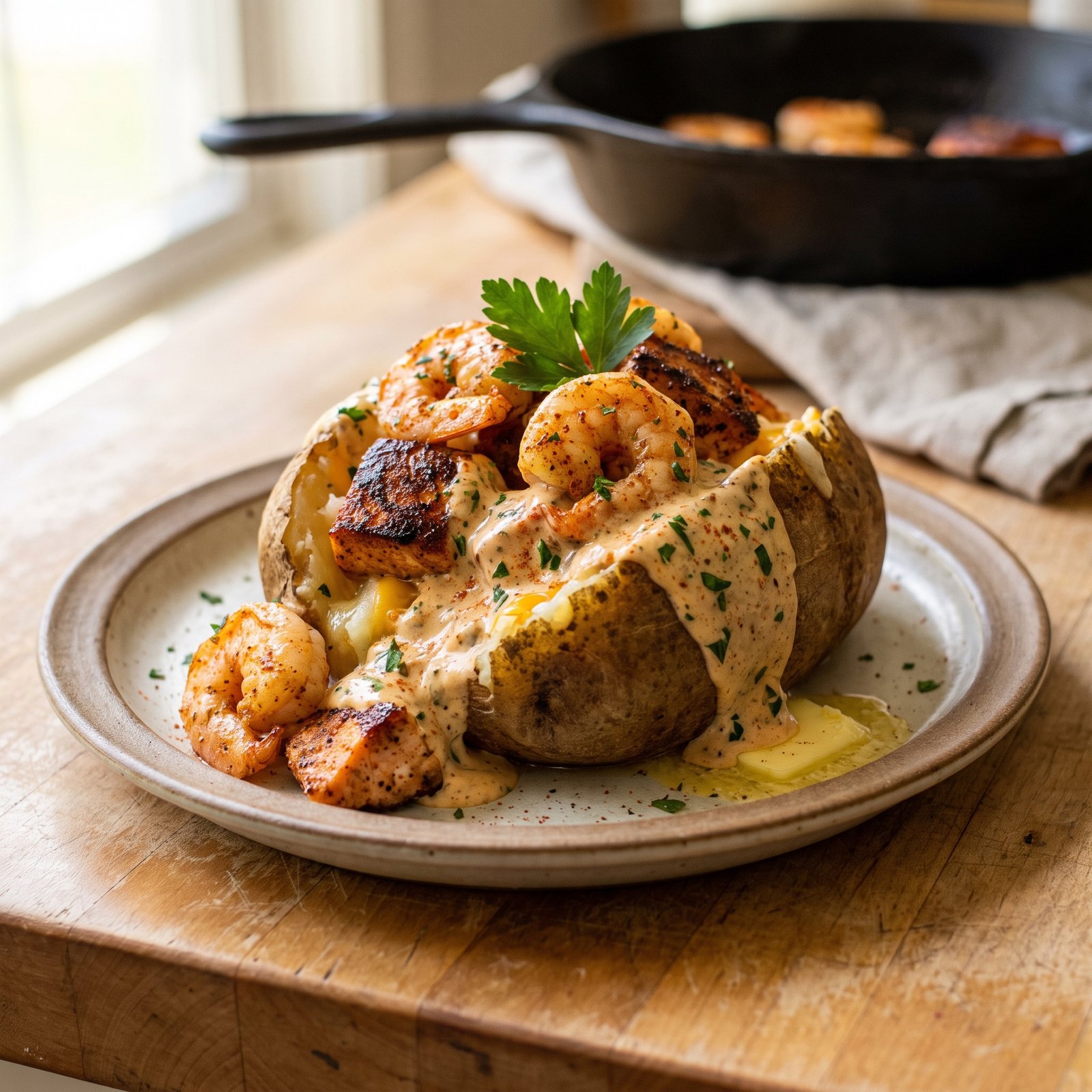
Creamy Cajun Salmon and Shrimp Baked Potatoes
Ingredients
Equipment
Method
- Preheat the oven to 425°F (220°C).
- Scrub the russet potatoes thoroughly and pat them completely dry. Pierce each potato 5–6 times with a fork.
- Rub the skins with olive oil and sprinkle with kosher salt.
- Place directly on an oven rack with a baking sheet underneath to catch any drips, or arrange on a rimmed baking sheet.
- Bake for approximately 50–65 minutes, depending on size, until the skins are crisp and the centers are completely tender when pierced with a knife.
- In a small bowl, combine smoked paprika, garlic powder, onion powder, dried thyme, oregano, black pepper, cayenne, and salt.
- Reserve ½ teaspoon of the mixture for the cream sauce.
- Pat the salmon pieces and shrimp dry with paper towels. Sprinkle the remaining Cajun seasoning over both, turning gently to coat evenly.
- Set aside while heating the skillet.
- Heat the olive oil and 1 tablespoon butter in a large skillet over medium-high heat.
- Add the seasoned salmon pieces in a single layer, leaving a little space between them.
- Sear for approximately 2–3 minutes per side, turning carefully, until golden and the thickest pieces reach 145°F (63°C).
- Transfer the salmon to a clean plate and keep warm. Avoid overcooking, as the salmon will continue to warm when the sauce is added.
- Add the shrimp to the same skillet.
- Cook for approximately 1–2 minutes per side, depending on their size, until the shrimp turn pink, opaque, and firm.
- Avoid overcrowding the pan, and work in batches if necessary.
- Transfer the cooked shrimp to the plate with the salmon. Do not leave the shrimp in the hot skillet while making the sauce, or they may become rubbery.
- Reduce the skillet heat to medium-low. Add the remaining 2 tablespoons butter.
- Stir in the minced garlic and cook for 30 seconds until fragrant.
- Pour in the broth, scraping the bottom of the skillet to loosen the flavorful browned bits.
- Add the heavy cream and reserved Cajun seasoning. Bring to a gentle simmer and cook for approximately 3–4 minutes.
- Reduce the heat to low and gradually stir in the grated Parmesan until the sauce becomes smooth and lightly thickened.
- Add lemon juice and taste before adjusting salt or pepper. Avoid boiling the sauce after adding the cheese.
- Return the cooked salmon and shrimp to the skillet.
- Gently fold them into the creamy Cajun sauce, taking care not to break the salmon into very small pieces.
- Warm over low heat for approximately 1 minute, just until everything is heated through.
- If the sauce becomes too thick, add a small splash of broth.
- Remove the baked potatoes from the oven.
- Carefully slice each potato lengthwise without cutting all the way through.
- Gently squeeze the ends to open the centers, then fluff the flesh with a fork.
- Divide the 2 tablespoons butter among the four potatoes and mix lightly into the fluffy interiors.
- Place each potato on a serving plate.
- Spoon a generous portion of Cajun salmon and shrimp over the center of each potato, dividing the seafood evenly.
- Drizzle with additional creamy Cajun sauce, then finish with fresh parsley and optional green onion.
- Serve immediately with lemon wedges on the side.
Success Tips
-Choose similarly sized potatoes. This helps all four potatoes finish baking at approximately the same time.-Dry the potato skins thoroughly. Moisture on the surface prevents the skins from becoming crisp.-Use fresh or properly thawed seafood. If using frozen salmon or shrimp, thaw in the refrigerator and pat dry before seasoning.-Don't overcrowd the skillet. Seafood needs direct contact with the hot surface to develop a flavorful crust.-Cook salmon and shrimp separately. They have different cooking times, and separating them helps prevent overcooking.-Grate Parmesan fresh. It melts more smoothly into the cream sauce.-Keep the sauce at a gentle simmer. High heat can cause the cream and cheese to separate.-Add lemon at the end. A little acidity brightens the rich sauce without overwhelming the seafood.-Serve immediately. Freshly baked potatoes and just-cooked seafood have the best texture.Storage and Reheating
-Refrigerator: Store the seafood topping and baked potatoes in separate airtight containers whenever possible. Refrigerate within 2 hours of cooking and keep at 40°F (4°C) or below for up to 3–4 days.-Freezer: The cooked seafood topping can be frozen for up to 2 months for best quality, but the cream sauce may separate after thawing. Baked potatoes can also be frozen separately, although their texture may become softer.-Thawing: Thaw frozen components overnight in the refrigerator. Avoid thawing at room temperature.-Seafood reheating: Place the seafood and sauce in a covered skillet over low heat. Add a splash of broth or cream and stir gently until the center reaches 165°F (74°C). Avoid prolonged heating, which can toughen the shrimp and dry out the salmon.-Potato reheating: Reheat baked potatoes in a 350°F (175°C) oven for approximately 15–25 minutes, depending on size, until thoroughly heated to 165°F (74°C).-Microwave: Reheat the potato and seafood separately in short intervals until each reaches 165°F (74°C).-Food safety note: If potatoes are wrapped in foil for cooking or storage, remove the foil before refrigeration and cool them promptly. This helps avoid conditions associated with Clostridium botulinum growth.Frequently Asked Questions
Can I use frozen salmon and shrimp?
Yes. Thaw frozen seafood in the refrigerator, drain any excess liquid, and pat dry before seasoning and cooking.
Can I use store-bought Cajun seasoning?
Yes. Replace the homemade blend with approximately 1½–2 tablespoons of your preferred Cajun seasoning. Check its salt content before adding extra salt, as commercial blends vary.
How do I prevent the cream sauce from separating?
Keep the heat low after adding Parmesan, use freshly grated cheese, and avoid boiling the sauce. Add lemon juice near the end.
Can I use smaller potatoes?
Yes, but the recipe will make more portions. Adjust baking time based on potato size and divide the seafood topping accordingly.
How spicy is this recipe?
With ¼ teaspoon cayenne distributed across four servings, it should have mild-to-moderate heat, depending on the paprika and individual preferences. Reduce or omit the cayenne for a milder version.
Can I prepare the seafood topping ahead of time?
Yes, but the texture is best when freshly cooked. If preparing ahead, refrigerate promptly and reheat gently to 165°F (74°C) before serving.


Leave a Reply